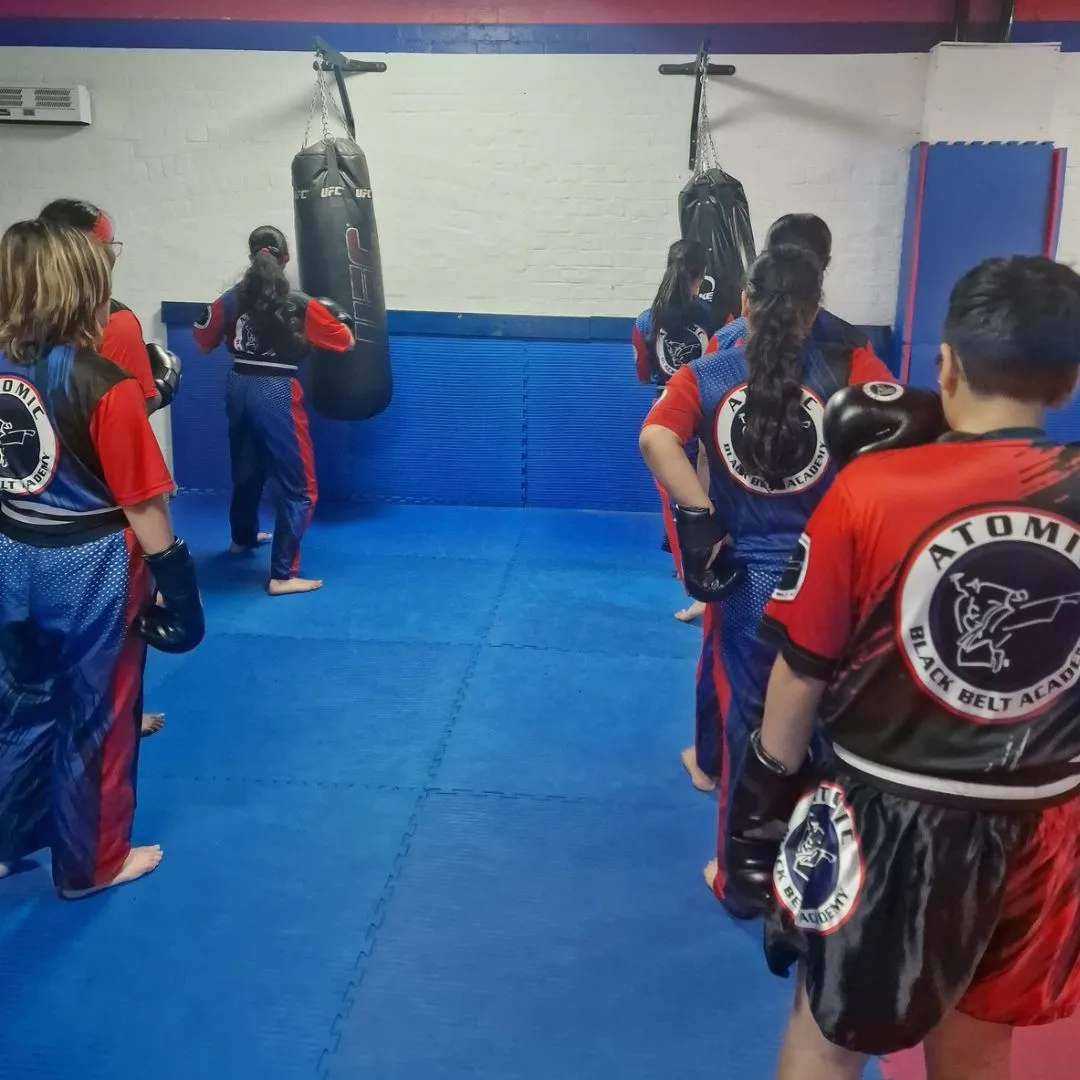
Children’s Martial Arts Coventry | Confidence, Focus & Perseverance
Small Steps, Big Achievements: Helping Children Build Confidence, Focus and Perseverance in Coventry
By Master Mark Junday, Chief Instructor, Atomic Black Belt Academy
Your child knows the answer, but hesitates to put their hand up. They are excited about a new activity, until it becomes difficult. Or you find yourself repeating the same instruction while their attention wanders elsewhere.
As a parent, you can see their potential. You want them to see it too.
With the new school year underway, October is a useful time to look beyond simply settling into a routine. What small steps could help your child feel more capable, concentrate on a task and keep going when something takes practice?
At Atomic Black Belt Academy in Coventry, these questions sit at the heart of our teaching. Our October theme, “Small Steps. Big Achievements.”, celebrates the everyday progress that can easily be overlooked.
How can martial arts help children build confidence and focus?
Age-appropriate martial arts gives children opportunities to practise listening, follow instructions, attempt unfamiliar skills and work towards achievable goals. With supportive teaching and regular practice, those experiences can help children develop confidence, focus and perseverance. Every child progresses differently, and the first achievement may be simply joining in.
The value lies in the teaching process: a manageable challenge, a chance to practise, useful feedback and another opportunity to try.
Confidence begins with something your child can do
Telling a child to “be more confident” gives them very little to work with. A clear, achievable task gives them somewhere to start.
In a martial arts session, that might mean learning a stance, remembering a short sequence or attempting a technique in front of an instructor. Each task can be broken into smaller parts so the child has a practical next step.
Consider a child who feels unsure about joining a group. Their first goal might be to step onto the mat and take part in the warm-up. Later, they might volunteer to demonstrate a movement. Every child will reach these milestones at their own pace.
Parents can support this approach by noticing specific effort:
“You joined in even though you felt nervous.”
“You asked for help and then had another go.”
“You remembered something you found difficult last time.”
That helps a child connect progress with something they actually did.
Focus is something children can practise
“Why won't they listen?” is a familiar frustration. But listening and following through involve several steps: noticing the instruction, understanding it, remembering it and putting it into action.
Structured training creates repeated opportunities to practise those steps. An instructor demonstrates a movement. The student watches, listens and attempts it. Feedback then gives them one thing to adjust.
For younger children, instructions need to be short and activities suited to their stage of development. Older children can work towards longer sequences and more independent practice.
At Atomic, our Little Ninjas curriculum includes Balance, Coordination, Focus, Teamwork, Discipline, Control, Memory and Fitness. These skills give our teaching a purpose beyond learning individual martial arts movements.
For more on this approach, read our guide to focus, discipline and life skills.
At home, try asking: “What was one instruction you remembered today?” It opens a more useful conversation than simply asking whether they were good.
Perseverance grows through manageable challenges
Some children are comfortable trying something new, but become frustrated when they cannot do it straight away. They may say, “I'm rubbish at this,” or ask to stop.
This is where the way an instructor responds matters. A child needs a clear adjustment they can try, and enough encouragement to attempt it again.
For example, a balance exercise can begin with a short hold. A sequence can be practised one movement at a time. The aim is to make the next step achievable while still requiring effort.
Parents can use the same approach with homework, reading or another activity:
Acknowledge the difficulty: “That part feels tricky.”
Find a smaller step: “Let's try just the first part.”
Recognise the attempt: “You changed your approach and kept going.”
This makes perseverance something a child can practise in a specific moment.
What does progress look like beyond a new belt?
A grading is a meaningful milestone. It gives students a goal to work towards and a chance to demonstrate what they have learnt.
But there are many useful signs of progress between gradings:
Area | A small achievement to notice |
|---|---|
Confidence | Joining an activity they previously hesitated to try |
Focus | Following a short sequence with fewer reminders |
Perseverance | Trying again after a mistake |
Control | Pausing and responding to an instruction |
Teamwork | Taking turns and encouraging a training partner |
Responsibility | Remembering their training kit and water bottle |
These examples give parents and instructors something concrete to discuss. They also keep the emphasis on each child's progress, rather than comparison with other students.
Choosing children's martial arts classes in Coventry
When you visit an academy, look closely at how children are taught. The quality of their experience depends on the people, programme and environment around them.
Useful questions include:
Is the programme appropriate for my child's age and experience?
How does the instructor support a nervous beginner?
Are instructions clear, and do children receive helpful feedback?
How are respect, control and safe participation taught?
Can I watch and discuss my child's progress with the team?
Atomic Black Belt Academy has served the Coventry community since 1999. Our full-time academy has three training rooms, parents' viewing areas and a free private car park.
Our children's programmes include Little Dragons for ages 3–4, Little Ninjas for ages 4–7 and Junior Martial Arts for ages 8–15. Where age ranges overlap, speak to our team about the programme most appropriate for your child's readiness.
Chief Instructor Master Mark Junday is an 8th Dan Black Belt and former World, European and British Champion, with more than 50 years of martial arts experience. The purpose of that experience is to help students understand their next step and learn how the principles they practise can apply in everyday life.
A simple small-steps challenge for parents
Choose one small goal with your child this week. Keep it specific: listening to the first instruction, trying a difficult movement again or encouraging a partner.
After training, ask:
“What did you try today?”
“What was difficult?”
“What would you like to practise next time?”
Notice effort honestly. Some sessions will feel easier than others. What matters is helping your child recognise a useful next step and giving them room to grow.
Frequently asked questions
Is martial arts suitable for a shy child?
It can be, when teaching is supportive and the programme suits the child. Let the instructor know about your child's concerns before their first session. A trial gives you both a chance to see how comfortable they feel and how the team supports them.
Does my child need to be confident or sporty before starting?
No previous martial arts experience is required to enquire about a beginner programme at Atomic. The team can discuss your child's age, readiness and needs to help identify an appropriate starting point.
How quickly will I notice a difference?
There is no fixed timetable. Look for small changes in participation, effort and independence over time. Discuss progress with the instructor rather than expecting a particular result after a set number of sessions.
Will martial arts help my child deal with bullying?
Training can provide opportunities to practise confidence, self-control and personal boundaries. Children should also learn to seek help from a trusted adult. Bullying requires support from parents and the school; physical techniques alone do not resolve it.
Can parents watch the sessions?
Yes. Atomic Black Belt Academy has parents' viewing areas, so you can observe your child's training and speak to the team about their progress.
How do I book a children's martial arts trial in Coventry?
Visit Atomic's free trial booking page and choose the relevant age group, to explore the right programme for your child.
More Advice for Coventry Parents
Explore more guidance from Atomic Black Belt Academy on supporting your child’s progress:
How to Build Confidence in Children (Coventry Parent Guide)
Explore how achievable goals, practice and encouragement can help children build belief in their abilities.Building Confidence, Focus and Resilience — Even If Your Child Is Shy
Discover how a supportive training environment can help a hesitant child take their first steps.Focus, Discipline and Life Skills: Children’s Martial Arts in Coventry
Read about listening, routines, respect and the everyday skills practised through martial arts.
Explore all Atomic’s martial arts articles for Coventry families
Help your child take their next small step
Your child does not need to arrive knowing every movement or feeling confident about everything. Their first step is to try a session, meet the team and discover how training feels.
Book a free trial session at Atomic Black Belt Academy in Coventry.
Dream It, Believe It, Achieve It.

